
Many beginner traders spend countless hours searching for profitable strategies, indicators, or AI-powered trading tools. While these elements can improve decision-making, they are not what ultimately determines long-term success.
Professional traders understand that profitable trading starts with protecting capital. This is where risk management in trading becomes essential. A well-designed risk management plan helps traders survive losing streaks, control emotions, and remain consistent over time.
Whether you trade Forex, stocks, commodities, indices, or cryptocurrencies, effective risk management is one of the few factors entirely under your control.
Risk Management in Trading is one of the most important skills every trader should develop before focusing on strategies or market analysis.
What Is Risk Management in Trading?
Risk management in trading refers to the process of limiting potential losses while maximizing long-term consistency. Rather than trying to win every trade, traders focus on protecting their capital so they can continue trading through different market conditions.
Markets are inherently unpredictable. Even the best trading strategy can experience several consecutive losing trades.
Successful traders accept uncertainty and prepare for it instead of trying to eliminate it.
Why Risk Management in trading Matters More Than Strategy
Many new traders believe that finding the “perfect strategy” will eliminate losses. Unfortunately, no trading system achieves a 100% win rate.
The National Futures Association (NFA) regularly reminds retail traders that capital preservation and disciplined risk management are essential for long-term trading success.
Professional traders understand that:
- Every strategy has losing periods.
- Capital preservation is the first priority.
- Consistency matters more than occasional large profits.
- Emotional control improves when risk is predefined.
Without proper risk management, even a profitable strategy can eventually fail because a few oversized losses may erase months of gains.
Never Risk More Than You Can Afford to Lose
One of the most common recommendations among professional traders is limiting the amount of capital risked on each position.
Many experienced traders choose to risk between 1% and 2% of their trading account per trade. This allows them to withstand multiple losing trades without significantly damaging their account.
For example:
- Trading account: $10,000
- Maximum risk per trade: 1%
- Maximum acceptable loss: $100
This simple rule helps prevent emotional decision-making and reduces the temptation to “revenge trade.”
The Importance of Stop-Loss Orders
A stop-loss is one of the simplest yet most effective risk management tools available.
Instead of hoping that the market eventually reverses, a stop-loss automatically closes the trade when a predefined loss level is reached.
Benefits include:
- Limiting unexpected losses
- Removing emotional hesitation
- Maintaining consistent discipline
- Protecting trading capital during volatile markets
A stop-loss should always be placed according to market structure rather than an arbitrary number of pips or dollars.
Position Sizing Is Just as Important
Risk management is not only about where to place a stop-loss.
It is also about selecting an appropriate position size. Position sizing is one of the core components of Risk Management in Trading.
Even an excellent trading setup becomes dangerous if the position size is too large.
Position sizing depends on:
- Account balance
- Percentage of capital at risk
- Stop-loss distance
- Market volatility
Many modern trading calculators automatically determine the appropriate position size before entering a trade.
Understanding Risk-to-Reward Ratio
A favorable risk-to-reward ratio (R:R) helps traders remain profitable even if they do not win every trade.
For example:
- Risk: $100
- Potential reward: $200
- Risk-to-reward ratio: 1:2
With disciplined execution, traders can remain profitable despite winning fewer than half of their trades.
However, risk-to-reward should never replace sound market analysis. High reward targets only make sense when supported by realistic price action.
Diversification Helps Reduce Exposure
Professional investors rarely rely on a single asset or market. The CFA Institute also identifies diversification as one of the key principles of sound investment and portfolio risk management.
Diversification can reduce overall portfolio risk by spreading exposure across different instruments.
Examples include:
- Forex pairs
- Stock indices
- Commodities
- Individual stocks
- Exchange-Traded Funds (ETFs)
Diversification does not eliminate risk, but it can reduce the impact of adverse movements in a single market.
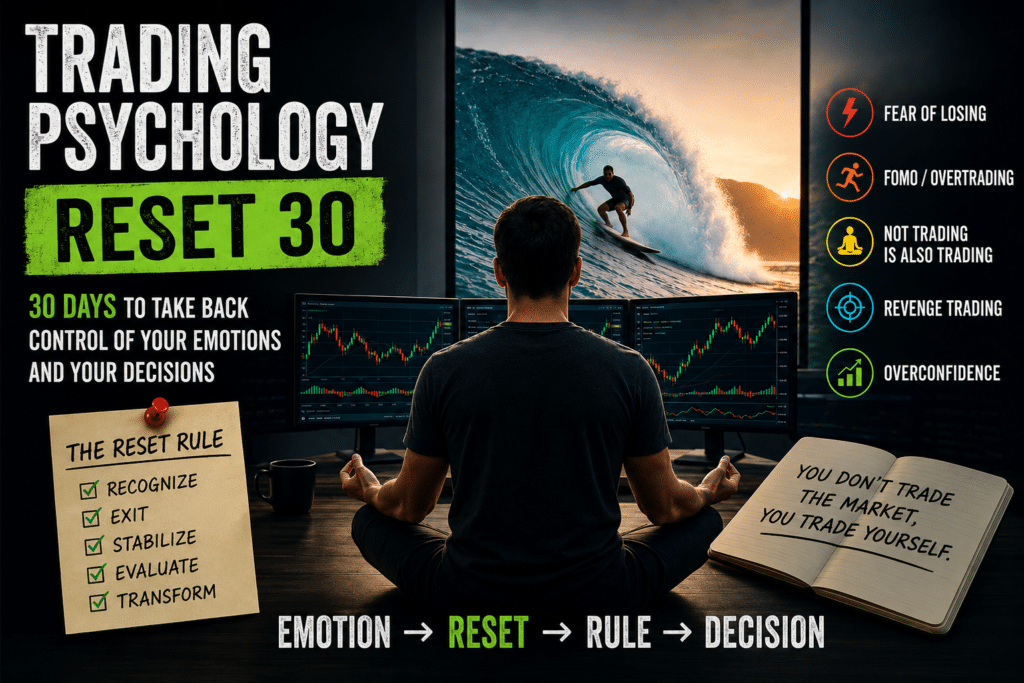
Emotional Discipline Is Part of Risk Management
Risk management is not purely mathematical.
It is also psychological.
Fear often causes traders to close winning trades too early, while greed encourages excessive position sizes or unnecessary risks.
Developing consistent habits can improve emotional discipline:
- Follow a written trading plan.
- Accept losses as part of trading.
- Avoid increasing position size after losses.
- Never move stop-loss orders simply to avoid taking a loss.
- Keep a trading journal to evaluate decisions objectively.
Consistency often comes from disciplined execution rather than constant strategy changes.
Common Risk Management Mistakes
Many traders struggle because they repeatedly make the same avoidable errors:
- Trading without a stop-loss
- Risking too much on one position
- Overleveraging
- Chasing losses after a losing trade
- Ignoring overall market volatility
- Trading without a clear plan
Avoiding these mistakes is often more valuable than finding a new trading strategy.
Technology Can Support Better Risk Management
Modern trading platforms increasingly include AI Trading Tools that help traders manage risk more effectively. Position size calculators, automated stop-loss placement, performance analytics, and AI-assisted trading journals can all improve consistency by reducing manual errors and providing objective performance data. While technology can enhance decision-making, it should always support a well-defined trading plan rather than replace it.
Final Thoughts
Every trader experiences losing trades.
The difference between successful traders and unsuccessful ones is rarely the absence of losses. Instead, it is their ability to control those losses before they become catastrophic.
Risk management is the foundation upon which every successful trading strategy is built. By limiting risk, maintaining discipline, and focusing on long-term consistency, traders give themselves the opportunity to survive difficult market conditions and benefit from future opportunities.
If there is one habit worth mastering before searching for the next profitable strategy, it is protecting your trading capital.
Risk management is only one part of becoming a successful trader. Equally important is selecting reliable Trading Brokers and Prop Firms that offer transparent trading conditions, fair execution, and appropriate risk controls. Combining sound risk management with the right trading environment creates a stronger foundation for long-term success.